
Edge AI vs Cloud AI: Choosing the Right AI Strategy for Your Business
Edge AI vs Cloud AI: Choosing the Right AI Strategy for Your Business
Introduction
Artificial Intelligence is no longer limited to research labs or large technology companies. Today, organizations across industries are integrating AI into customer service, manufacturing, healthcare, retail, logistics, and enterprise applications to improve efficiency and make better decisions.
As businesses adopt AI, one critical architectural decision often arises:
Should AI process data in the cloud, or should it run directly on the device where the data is generated?
This decision has led to two primary approaches:
- Cloud AI
- Edge AI
Both approaches use Artificial Intelligence, but they differ in how data is processed, how quickly decisions are made, and where computing resources are located.
Choosing the right approach depends on your business goals, performance requirements, security considerations, and infrastructure.
Understanding Cloud AI
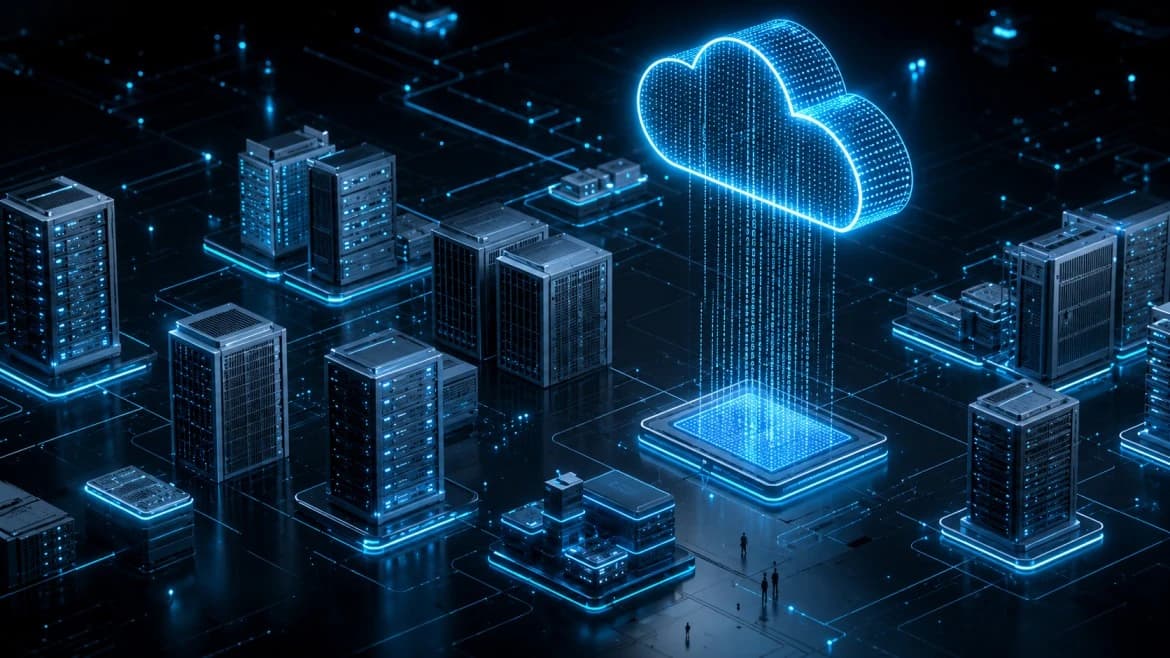
Cloud AI refers to AI models that run on remote cloud infrastructure.
The process typically follows these steps:
- A device captures data.
- The data is securely transmitted to cloud servers.
- AI models process the information.
- Results are sent back to the application or user.
Cloud AI powers many services that people use every day, including:
- AI chatbots
- Recommendation engines
- Predictive analytics
- Image generation
- Language translation
- Enterprise AI assistants
Because cloud platforms provide virtually unlimited computing resources, they are well suited for large-scale AI workloads.
What is Edge AI?
Edge AI brings intelligence directly to the device.
Instead of sending data to remote servers, AI models execute locally on devices such as:
- Smartphones
- Security cameras
- Industrial equipment
- IoT sensors
- Medical devices
- Manufacturing systems
By processing data closer to where it is generated, Edge AI delivers faster responses while reducing dependence on internet connectivity.
Edge AI vs Cloud AI
| Feature | Cloud AI | Edge AI |
|---|---|---|
| Processing Location | Cloud servers | Local device |
| Internet Dependency | Required | Optional |
| Response Time | Moderate | Very Fast |
| Privacy | Data leaves device | Data remains local |
| Scalability | Excellent | Limited by hardware |
| Processing Power | High | Depends on device capability |
Neither approach is universally better.
The best solution depends on your application.
Advantages of Cloud AI
High Computing Power
Large AI models require powerful GPUs and large amounts of memory.
Cloud infrastructure makes this possible without requiring businesses to purchase expensive hardware.
Easy Scalability
As workloads increase, cloud platforms can quickly allocate additional computing resources.
This makes Cloud AI ideal for organizations serving thousands or millions of users.
Centralized Updates
AI models can be updated once in the cloud and immediately benefit every connected application.
Lower Device Requirements
Since computation happens remotely, endpoint devices can remain lightweight and energy-efficient.
Advantages of Edge AI
Real-Time Decision Making
Because data is processed locally, Edge AI dramatically reduces latency.
Applications such as autonomous vehicles and industrial automation cannot afford delays caused by cloud communication.
Improved Privacy
Sensitive information remains on the device instead of being transmitted to external servers.
This helps organizations comply with privacy regulations and reduce security risks.
Offline Operation
Edge AI can continue functioning even when internet connectivity is unavailable or unreliable.
Reduced Bandwidth Costs
Instead of continuously sending large volumes of data to the cloud, only important events or summaries need to be transmitted.
Real-World Applications
Manufacturing
Edge AI enables production equipment to detect defects instantly, while Cloud AI aggregates factory-wide performance data for long-term analysis.
Healthcare
Medical devices can process patient information locally for immediate decisions, while cloud platforms assist with research and predictive analytics.
Retail
Smart checkout systems, inventory monitoring, and customer analytics combine Edge AI for speed with Cloud AI for centralized reporting.
Smart Cities
Traffic cameras, parking systems, and environmental sensors increasingly use Edge AI to process data locally while sharing aggregated insights with cloud platforms.
When Should Businesses Choose Cloud AI?
Cloud AI is often the best choice when organizations need:
- Large-scale analytics
- Advanced Large Language Models (LLMs)
- Centralized AI management
- High-performance model training
- Enterprise-wide reporting
When Should Businesses Choose Edge AI?
Edge AI is ideal when applications require:
- Low latency
- Offline capabilities
- Enhanced privacy
- Local decision-making
- Reduced network dependency
The Future is Hybrid AI
Many organizations are adopting a hybrid architecture that combines the strengths of both approaches.
For example:
A smart manufacturing facility may use Edge AI to detect equipment failures in real time while sending summarized operational data to Cloud AI for predictive maintenance analysis.
Similarly, a retail chain might process customer interactions locally while using cloud-based AI to optimize inventory across all store locations.
Hybrid AI enables businesses to balance speed, scalability, cost, and security.
Key Considerations Before Choosing
When planning your AI strategy, ask the following questions:
- Does the application require real-time decisions?
- Will it operate in locations with unreliable internet?
- How sensitive is the data?
- How much computing power is required?
- How many devices need to be managed?
The answers will help determine whether Cloud AI, Edge AI, or a hybrid solution is the best fit.
Conclusion
Artificial Intelligence is reshaping how businesses operate, but choosing where AI runs is just as important as choosing the AI model itself.
Cloud AI offers unmatched scalability and computing power, making it ideal for complex enterprise workloads.
Edge AI delivers speed, privacy, and resilience by bringing intelligence closer to where data is created.
For many organizations, the future lies in combining both approaches to build intelligent, efficient, and secure AI systems.
Understanding these architectures today will help businesses make better technology decisions and remain competitive in an increasingly AI-driven world.
Frequently Asked Questions
What is Edge AI?
Edge AI runs AI models directly on local devices such as cameras, smartphones, sensors, and industrial equipment.
What is Cloud AI?
Cloud AI processes information using remote cloud infrastructure with high-performance computing resources.
Which is faster?
Edge AI generally offers lower latency because processing occurs locally.
Is Cloud AI more powerful?
Yes. Cloud platforms provide significantly greater computing resources, making them ideal for large AI models.
Can businesses combine both?
Yes. Hybrid AI architectures that integrate Edge AI and Cloud AI are becoming the preferred approach for many enterprise applications.
About MYWE Technologies
MYWE Technologies a leading IT firm in Thrissur,kerala, helps businesses accelerate digital transformation through Artificial Intelligence, Cloud Solutions, Intelligent Automation, Custom Software Development, Data Analytics, and Enterprise Technology Consulting.
Our team designs scalable AI architectures tailored to business requirements, enabling organizations to build secure, intelligent, and future-ready digital solutions.
Ready to explore the right AI strategy for your business?
Connect with MYWE Technologies to discover how Edge AI, Cloud AI, and intelligent automation can transform your operations.
Related Articles
 Artificial Intelligence
AI Observability: Why Monitoring AI Systems Is the Next Big Enterprise Challenge
 Artificial Intelligence
Retrieval-Augmented Generation (RAG): Why AI Needs Context to Deliver Better Answers
 Artificial Intelligence